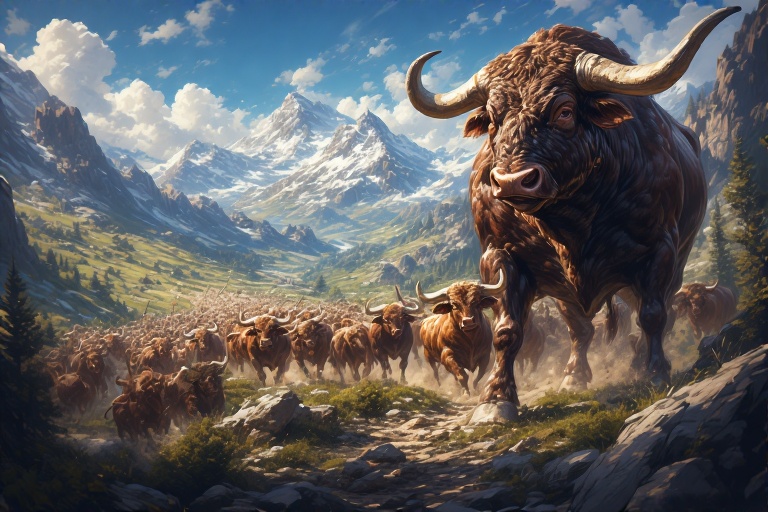
Cattle have a strict, linear hierarchy (also known as a pecking order). Each animal knows its exact place within the structure. This hierarchy is vital for the survival and peace of the herd, as it prevents constant, energy-draining fights.
How is the hierarchy established?
The hierarchy is usually determined by physical and psychological strength. Important factors for a high rank include:
- Age and experience: Older animals usually rank higher.
- Body weight and size: Heavier and larger cattle are more likely to assert themselves.
- Horns: If a horned cow is in a hornless herd, it almost always takes a top position.
- Character: Courage and aggressiveness play a role; fearful animals quickly subordinate themselves.
Once the hierarchy between two animals is settled, a small threatening gesture (such as lowering the head) is often enough in everyday life for the lower-ranking animal to back down.
The Role of the Lead Cow
The highest-ranking animal is the lead cow. She leads the herd, determines the direction when foraging, and warns of dangers.
- Interesting fact: The lead cow is not automatically the breeding bull. Although a bull is physically superior to the cows, he often stays apart and leaves the social leadership to the lead cow.
- The lowest-ranking animals (often young or sick cattle) eat last and have to wait at bottlenecks.
When does the hierarchy get disrupted?
The hierarchy is stable, but not carved in stone forever. Fights and unrest occur when:
- New animals are integrated into the herd.
- Young animals grow up and challenge older, weaker animals.
- Animals leave the herd for a long time (e.g., due to illness) and return.
In modern agriculture, this knowledge is particularly important: frequent regrouping or insufficient space at the feeding fences mean enormous stress for low-ranking animals.
